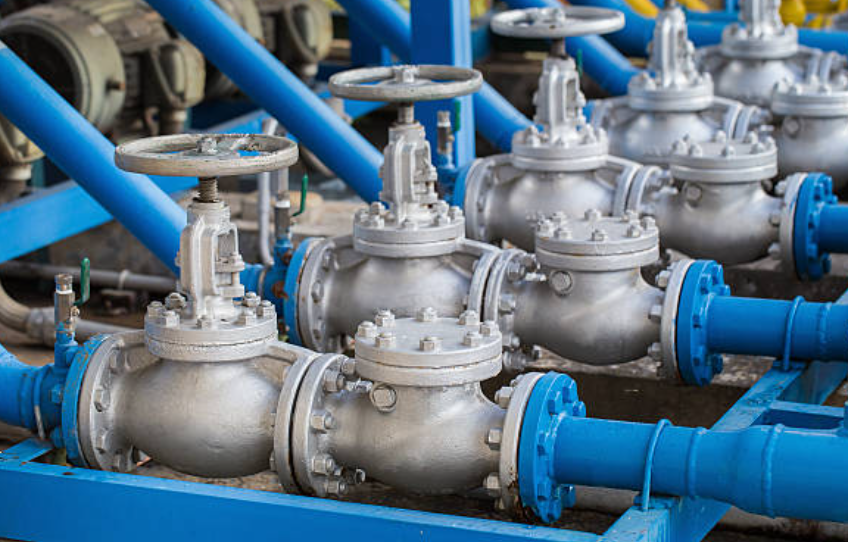
Industrial valves are categorized by operation mode into manual and automated types, each designed to meet specific system requirements, operational efficiency, and safety needs. Understanding their differences, advantages, and ideal applications is key to selecting the right valve for your project and optimizing system performance.
Manual valves rely on human intervention to open, close, or adjust flow, using handwheels, levers, or gears. They are the most basic and cost-effective valve type, with a simple structure that requires minimal maintenance and no external power source. Common manual valve types include handwheel-operated gate valves, globe valves, and ball valves, widely used in small-scale systems or non-critical applications where flow adjustments are infrequent.
The primary advantages of manual valves are low initial cost, high reliability, and easy installation. They have fewer components, reducing the risk of mechanical failure, and are ideal for applications where power outages are common—since they don’t rely on electricity, pneumatic, or hydraulic power to operate. For example, manual ball valves are commonly used in small industrial workshops, residential water supply systems, and auxiliary pipelines where operators can easily access and adjust the valve as needed.
However, manual valves have clear limitations: they require on-site operation, making them impractical for remote or hard-to-reach locations (e.g., high-altitude pipelines, underground systems, or hazardous environments like chemical tanks). They also lack precision in flow control compared to automated valves, as adjustments depend on the operator’s experience, which can lead to inconsistent performance. Additionally, frequent operation can be labor-intensive, increasing long-term operational costs for large-scale systems.
Automated valves, by contrast, use external power sources (electric, pneumatic, hydraulic) and control systems to operate without human intervention. They are equipped with actuators—devices that convert energy into mechanical motion to open or close the valve—and can be integrated with PLC (Programmable Logic Controller) systems for remote control, monitoring, and automated adjustment.
Electric automated valves are powered by motors, offering precise flow control and easy integration with digital control systems. They are ideal for applications requiring accurate modulation, such as power plant steam control, water treatment plant flow regulation, and automated production lines. Pneumatic valves use compressed air to operate, providing fast response times (milliseconds to seconds) and are suitable for high-pressure, high-temperature environments where electric motors may be at risk of overheating.
Hydraulic automated valves are powered by hydraulic fluid, delivering high torque for large-diameter valves (DN 500+) used in oil and gas transmission, marine engineering, and heavy industry. They excel in harsh environments with extreme temperatures or vibration, offering superior durability and reliability.
The key advantages of automated valves are remote operation, precise flow control, labor savings, and integration with smart systems. They can be programmed to operate at specific times, respond to pressure or temperature changes, and provide real-time data on valve status, enabling predictive maintenance and reducing unplanned downtime. However, they have a higher initial cost, require regular maintenance of actuators and control systems, and depend on a stable power source.
When selecting between manual and automated valves, consider factors such as system size, operational frequency, access to the valve location, flow control precision needs, and budget. For small-scale, low-frequency operation, manual valves are cost-effective; for large-scale, critical, or remote systems, automated valves offer efficiency and safety benefits that outweigh the higher initial investment.