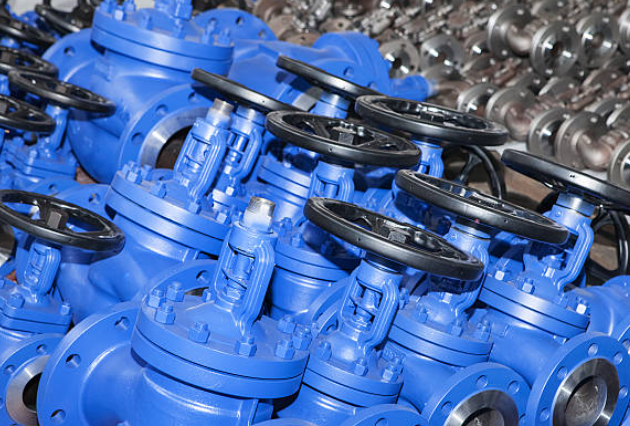
Valve material selection directly impacts durability, performance, and total cost of ownership. The three most common materials—cast iron, cast steel, and stainless steel—each have distinct advantages tailored to specific industrial scenarios.
Cast iron valves are the economical choice for low-pressure, non-corrosive applications. Ductile iron (DI) valves, an upgraded version of gray cast iron, offer better tensile strength and are widely used in municipal water supply systems. Their cost-effectiveness makes them ideal for large-scale projects like urban water pipelines, where hundreds of valves are required . However, cast iron is prone to brittleness under high temperature or pressure, so it’s not suitable for steam or chemical pipelines.
Cast steel valves (e.g., WCB, WC9) excel in high-temperature and high-pressure environments. WCB carbon steel valves can withstand temperatures up to 425℃ and are commonly used in power plant steam systems, while WC9 alloy steel valves handle extreme conditions up to 540℃ in boiler main pipelines . Their robust structure and corrosion resistance make them the top choice for petroleum refining and chemical processing, where media like crude oil and natural gas exert high pressure and cause wear.
Stainless steel valves (304/316 grades) are indispensable for corrosive or sanitary applications. 304 stainless steel resists mild acids and alkalis, making it suitable for food processing and water treatment plants. 316 stainless steel, with added molybdenum, offers enhanced corrosion resistance against seawater and harsh chemicals, making it ideal for marine and offshore platforms . For example, 316L stainless steel ball valves are standard in LNG terminals, where they withstand -196℃ temperatures and prevent corrosion from liquefied natural gas.
Special materials like Hastelloy and titanium are used for extreme conditions: Hastelloy valves in nuclear power plants resist radiation and high temperatures, while titanium valves in aerospace applications offer lightweight strength. When choosing materials, consider media type (water/steam/chemicals), temperature (-200℃ to 600℃), pressure (PN 10 to PN 400), and environmental factors (humidity, salinity). Consult material compatibility charts and request material test reports (MTRs) from suppliers to ensure reliability.